
In college, I had lunch with a man finishing up his doctorate in philosophy. I’d proposed the meal to talk about theology and the visual arts, and while we talked about that at length I specifically remember one sentence from that meal together.
Paraphrased, he said, “I’ll need to spend some time thinking about that.”
As silly as it seems, I couldn’t remember anyone in my life up to that point (and I’m not sure I’ve heard anyone since, now that I think of it) speak of dedicating time to thinking about something, anything, in such a purposeful way.
I was a doer, someone who learned with my hands, immersed in an American culture of doers. Reflection was only a thing if you were on vacation, and even then most people seemed to cram as much into a vacation itinerary as they could.
Despite the permanent spot in my memory that phrase has, it’s a very difficult thing to live by. Perhaps especially as a parent; interruptions seem to be life’s status quo. Work needs this and that now. Social media undeservedly demands our downtime. In fact, we fill what would be downtime with these other things that direct our minds such as television, taking away opportunities for us to direct our own thoughts in a focused manner. Public discourse suffers dramatically from a lack of ability or intentionality toward dedicated time in critical thought.
Shinrin Yoku, the Japanese philosophy of forest bathing and part of the inspiration for the planet of Ponderoku, encourages time for head space.
One of the things I envision on Ponderoku is a culture that values taking time. Taking time to think. To consider all of the options from different points of view. To complete a task to the best of your ability. Not sacrificing quality because of a deadline. Not forgetting something you hoped to remember just because too many other things required attention and mental space before you got to it.
Space for time, time for head space.
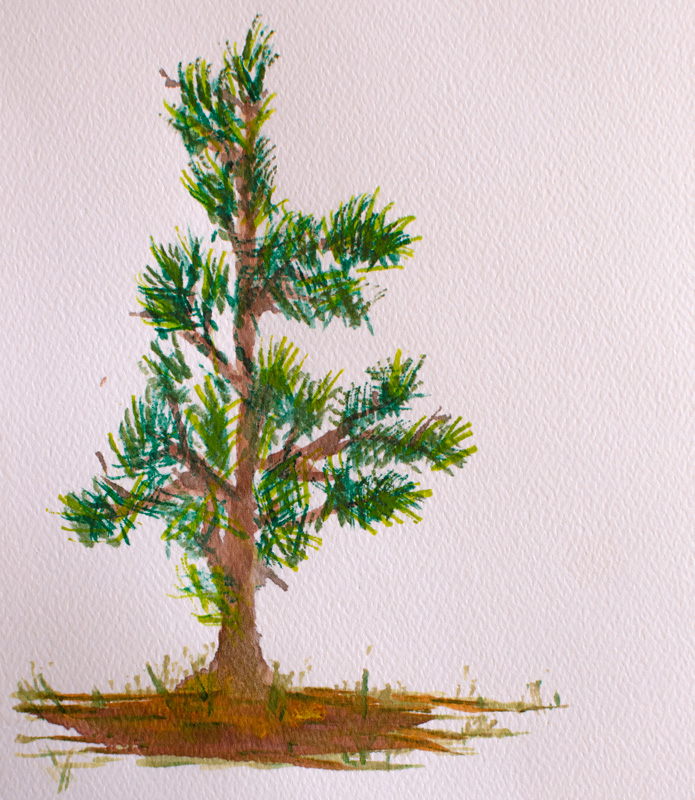
Small pine tree, 2019. Watercolor
 ponderoku.com